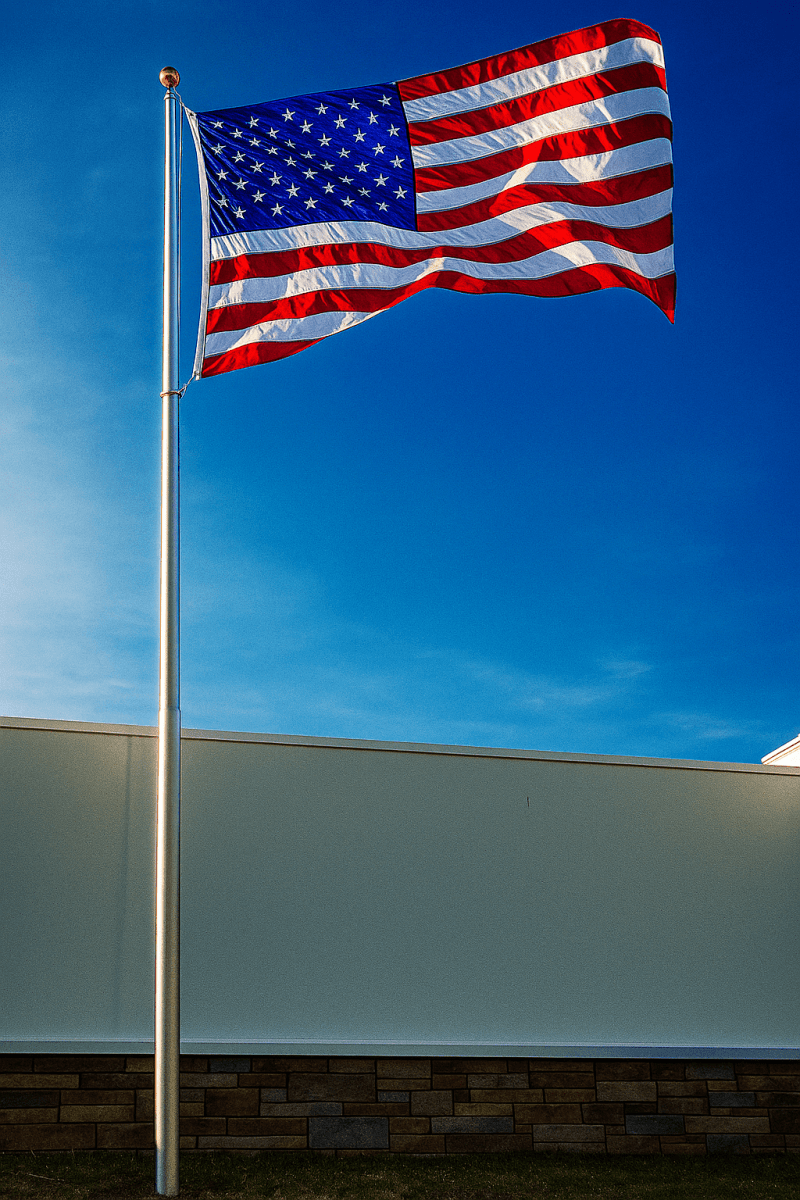
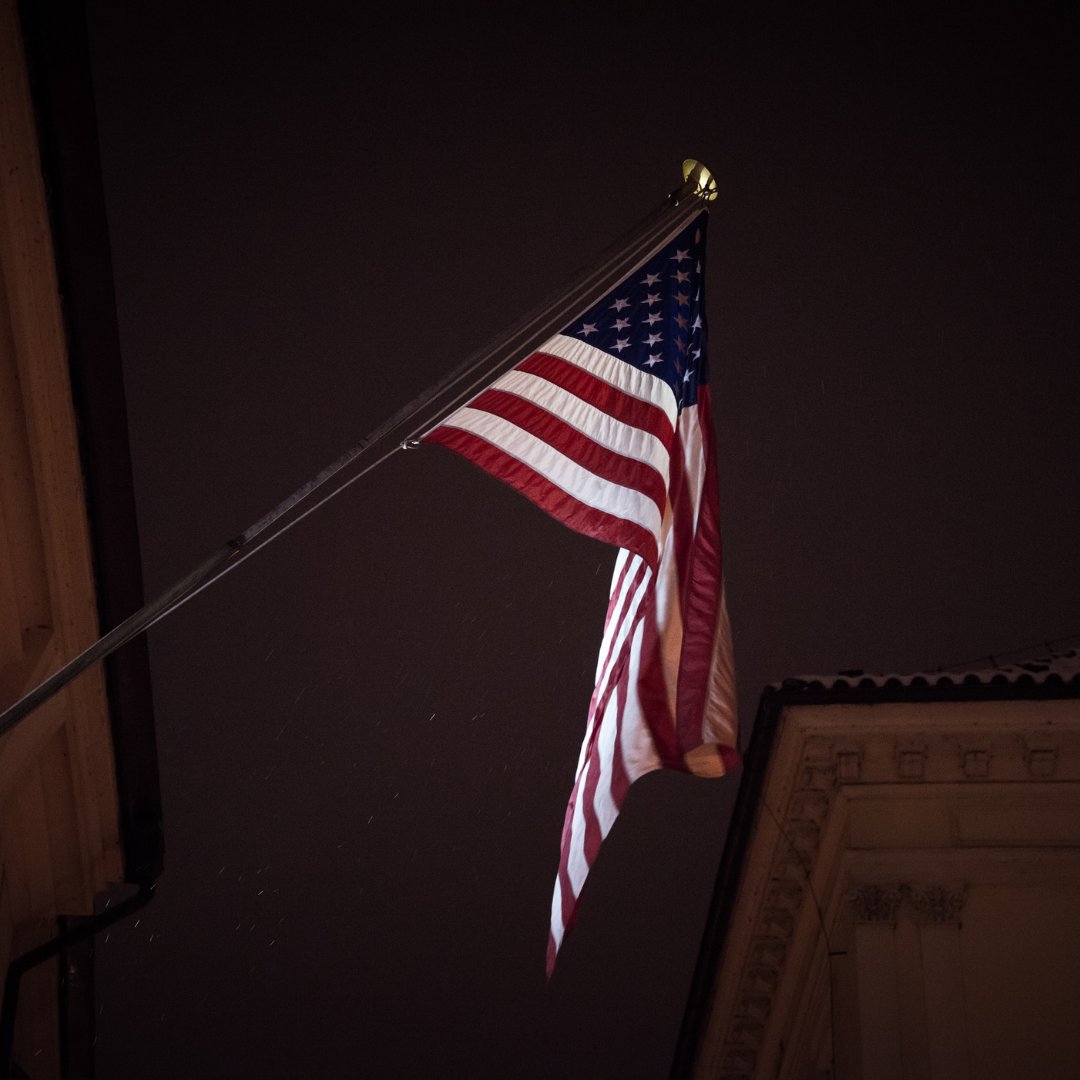
If you leave your flag flying after sunset, the light should turn on without you having to watch the clock every evening. Photocell sensors handle that job by responding to the light around them, switching compatible fixtures on as evening settles in and off again after daylight returns. Knowing how photocell sensors automatically control flagpole lighting can help you choose a setup that keeps nighttime illumination simple. Once set up correctly, it follows the change from day to night.
How Photocell Sensors Recognize Dusk and Dawn
A photocell is a small sensor that responds to ambient light, meaning the light present around the fixture. During the day, enough brightness keeps the fixture off. As the surroundings grow darker, the sensor tells the compatible lighting system to switch on.
The process reverses in the morning. Once enough daylight reaches the sensor, the fixture turns off. Because the photocell responds to outdoor light, it does not need a programmed sunset or sunrise time.
That helps as the seasons change. Winter evenings arrive earlier than summer ones, but the sensor adjusts without a reset. The light responds to the conditions outside instead of following a clock.
How Automatic Control Supports Nighttime Flag Display
The United States Flag Code allows the American flag to be displayed 24 hours a day when properly illuminated during darkness. Automatic lighting can make that easier by handling the daily on-and-off routine. The photocell controls when the fixture operates, but the light still has to reach the flag.
That distinction matters because an automatic sensor cannot make up for poor placement. The fixture should illuminate the flag as it moves in the breeze rather than lighting only the pole. A light that switches on at the right time is useful only if the flag is actually visible.

For homeowners who keep the Stars and Stripes raised overnight, photocell control removes one chore from the routine. Commercial properties can benefit for the same reason. Once positioned correctly, the lighting can follow daylight with little attention.
How Solar Lighting Components Work Together
On a solar flagpole light, the photocell and solar panel have separate jobs. The solar panel collects energy from sunlight and charges the fixture's battery. The photocell watches the surrounding light so the system knows when nighttime operation should begin.
Knowing the difference can make troubleshooting less confusing. A clear photocell will not help much if the solar panel spends most of the day in shade. A fully charged fixture may also switch at an odd time if another light shines toward the sensor.
If you are comparing flagpole light toppers for a residential display, check the product information for automatic dusk-to-dawn operation. Do not assume every solar fixture uses the same controls. Knowing how the light operates can save some head-scratching after installation.
How Sensor Placement Affects Automatic Operation
A photocell can only respond to the light that reaches it. Shade can change what the sensor sees, and nearby fixtures can do the same after dark. A good location gives the photocell a clear read on the transition from daylight to darkness.
Before installation, look at the area during the day and again after your exterior lights come on. A porch light aimed toward the sensor may make it seem brighter outside than it really is. Heavy shade can create the opposite problem by making the sensor's location dark earlier than the rest of the property.
A few checks can support reliable operation:
- Keep the sensor exposed to outdoor daylight.
- Avoid directing another light straight at the sensor.
- Keep leaves and other debris away from the sensing area.
- Clear snow if it begins covering the fixture.
- Follow the manufacturer's mounting instructions.
Weather can shift the timing, too. A dark, cloudy afternoon may look different to the sensor than a bright evening. That does not automatically mean something is wrong because the photocell responds to brightness, not the exact minute listed for sunset.
On many top-mounted solar lights, the photocell is built into the fixture. Keep the unit unobstructed, and make sure the solar panel gets enough daylight to charge. If performance changes later in the year, check for seasonal shade.
How Photocells Compare With Fixed Timers
A fixed timer follows a programmed schedule. If it is set to switch on at seven o'clock, it follows that time whether the evening is dark or the sun is still up. A photocell works differently because it reacts to the light around the fixture.
For flagpole lighting, that can mean fewer seasonal adjustments. The sensor responds as days grow shorter in fall and longer again in spring. You do not have to keep reprogramming a timer just to stay close to sunset.
A timer can still be useful when a property needs lighting to follow a specific schedule. Some systems combine time-based controls with light sensing. Whatever setup you use, stick with controls that are compatible with the fixture and follow the manufacturer's directions.
Once you understand how photocell sensors control flagpole lighting, the difference is easier to weigh. Photocells fit displays that should follow dusk and dawn, while timers make more sense when a specific clock time matters.
How To Check a Light That Is Switching Incorrectly
An automatic light that stays on during the day or stays dark at night can be frustrating, but the photocell isn't always the problem. Start by looking around the fixture before assuming a component has failed. A blocked sensor or nearby light may be enough to throw off the timing.
For solar fixtures, charging conditions deserve a look as well. A panel with limited sunlight may not store enough energy for nighttime operation even when the photocell is switching correctly. Keeping the sensor and panel clear is a sensible first step.
If the light is behaving unexpectedly, check these basics:
- Look for anything covering the photocell or solar panel.
- Check whether another outdoor light shines toward the sensor.
- Confirm that the fixture is installed in the correct position.
- Review the manufacturer's instructions for operating modes.
- Contact the manufacturer or seller if the problem continues.
Avoid opening sealed electrical components or modifying the fixture unless the manufacturer tells you to do so. If those checks do not solve the issue, the product instructions or manufacturer should be your next stop.

How Automatic Lighting Simplifies Nighttime Displays
Photocell control keeps nighttime flag lighting from becoming one more thing to remember. When the sensor has a clear view of the surrounding light and the fixture is positioned properly, your setup can handle the transition from dusk to dawn with ease.
Liberty Flagpoles offers solar flagpole lighting options for homeowners and commercial properties that want to keep their flags illuminated after dark. Our team can help you compare available options and choose a light that works with your flagpole and display.
For expert help bringing the rest of your flagpole setup together, check out our professional flagpole installation services. Our team can help with the installation so your flagpole is positioned properly and ready for a polished nighttime display.