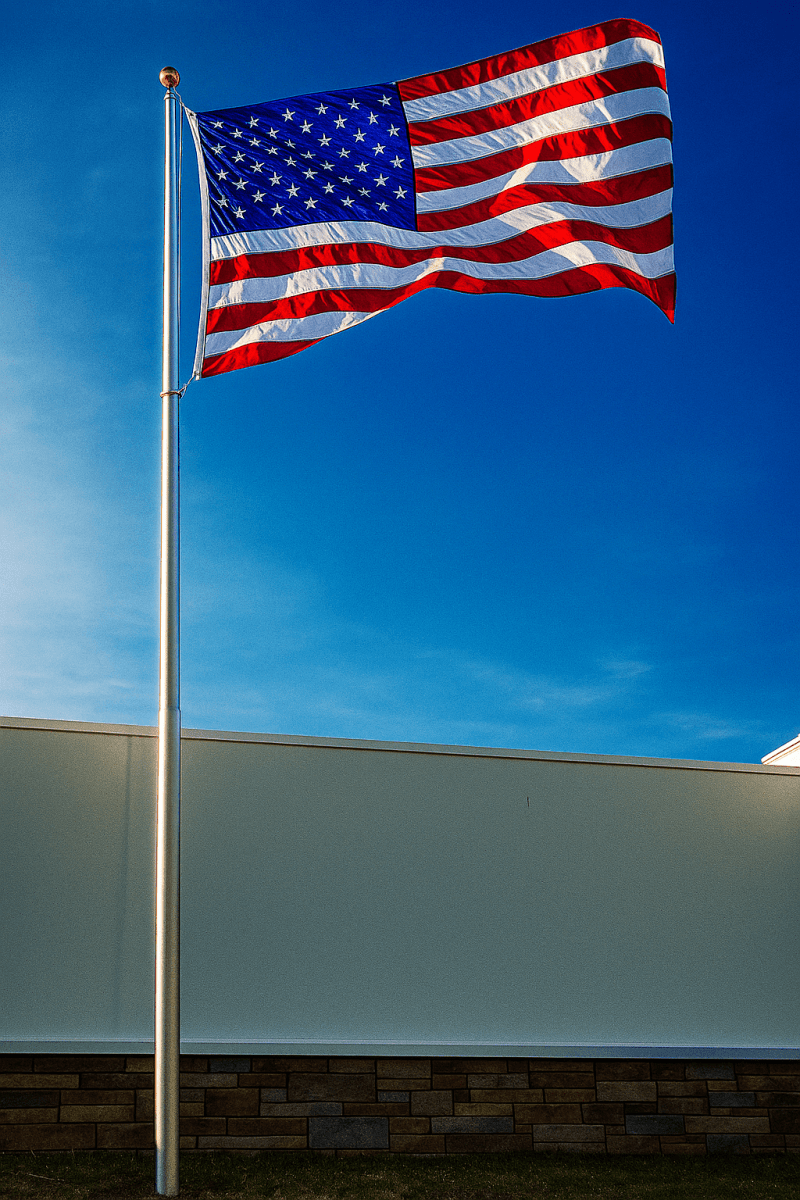

Flying a flag on a tall pole makes a strong, lasting impression. It’s a clear way to display your pride while giving your property a polished, professional look. Before installing a taller system, though, it’s worth knowing what keeps it secure when the weather shifts. Understanding wind load calculations for tall flagpoles helps you choose a setup that holds up over time.
What Is Wind Load and Why Does It Matter?
Wind load is the force that wind applies to a structure. In this case, it affects both the flagpole and the flag itself. As wind pushes against the fabric, that pressure transfers directly into the pole.
Taller flagpoles naturally see more exposure. As height increases, so does the leverage at the base, which adds stress to the system. Even steady winds can create ongoing strain, especially in open areas where there’s little protection.
Accounting for wind load helps prevent bending or instability. It also keeps your flagpole looking sharp and performing reliably as a weather-resistant feature over the long haul.
There’s also a maintenance side to consider. A pole that handles more stress than it was designed for may wear down hardware faster. Planning ahead reduces strain on clips, halyards, and connection points so everything keeps working the way it should.
What Factors Influence Wind Load?
Wind load depends on more than just how fast the wind blows. Several factors work together to determine the total force on your flagpole.
Flag size, pole height, and local wind patterns all play a role. The surrounding environment matters, too, especially if your property sits in an open space or near large structures that channel wind.
Material strength and construction also factor in. Looking at these elements together gives you a clearer sense of what your flagpole needs to handle daily conditions and stronger gusts.
It also helps to think seasonally. Weather patterns shift throughout the year, bringing stronger winds or sudden storms. Planning for those peak conditions—not just average days—helps protect your setup.
How Flag Size Affects Wind Pressure
The flag itself has a big impact on wind load. When wind hits the surface, it creates resistance that transfers force into the pole. Larger flags create more resistance, especially during gusty conditions.
That’s why proper sizing matters. A flag that’s too large for the pole height adds unnecessary strain. It may look impressive at first, but it won’t perform as well over time.
Keeping the flag size in proportion to the pole helps everything work together. You get a clean, balanced display without adding extra stress to the system.
Some property owners take a practical approach and adjust based on conditions. Using a standard flag most days and switching to a smaller one during high winds can help extend the life of both the flag and the pole.

How Height Increases Wind Exposure
Height changes how a flagpole interacts with wind. As you go higher, wind speeds tend to increase, and the pressure becomes more consistent.
A taller pole also creates more leverage at the base. That leverage adds stress, which is why stronger materials and a properly designed foundation matter so much. Without that support, long-term issues can develop.
In many commercial settings, height is chosen for visibility. A taller pole helps your flag stand out across larger properties or along busy roadways. Balancing that visibility with proper wind load planning gives you both impact and reliability.
How Materials Respond to Wind Stress
Different materials respond to wind in different ways. Choosing the right one helps your flagpole perform well over time.
Aluminum offers a strong, lightweight option that resists corrosion and holds up in many environments. Fiberglass, on the other hand, provides some flexibility, allowing the pole to move slightly without lasting damage.
Both are common choices for larger installations. The best option depends on your location and how much wind exposure your property sees.
Finishes also play a role. Anodized or coated surfaces help protect the pole from the elements while keeping it looking clean and professional.
How Wind Ratings Define Performance Limits
Most flagpoles come with wind ratings that outline their limits. These ratings show how much wind a pole can handle under certain conditions.
You’ll often see separate ratings for use with and without a flag. That distinction matters because the flag increases surface area and resistance.
Comparing these ratings to your local weather patterns helps you make a smart choice. In areas with frequent wind or seasonal storms, a higher rating offers added confidence. Think of wind ratings as a safety range. Staying within those limits helps reduce strain, while pushing beyond them can shorten the lifespan of your flagpole over time.
Why Foundation Design Supports Stability
The foundation is what keeps everything grounded. It absorbs the force that travels down the pole and keeps the structure stable. A properly built foundation prevents shifting or leaning and supports the system during stronger winds. It’s one of the most important parts of the entire installation.
Soil conditions and drainage both play a role in how the foundation performs. Paying attention to these details helps ensure your flagpole stays secure and aligned. In areas with freeze-thaw cycles or heavy rain, proper drainage becomes even more important. Small details at the base can make a big difference over time.
How To Choose the Right Flagpole for Your Property
Choosing the right flagpole starts with understanding your environment. Wind load calculations help guide your decision, but they’re only part of the picture.
You’ll also want to think about how the pole fits your property and how often it will be used. A well-matched system balances appearance with long-term durability.
It helps to consider future needs as well. Will your flag be up year-round? Will the location see heavy foot traffic? Answering those questions makes it easier to choose a flagpole that fits both now and later.
When everything lines up, your flagpole becomes a reliable feature that enhances your space and lets you display your pride with confidence.

How Proper Planning Builds Long-Term Confidence
Understanding wind load calculations for tall flagpoles puts you in a better position from the start. When you account for wind, materials, and installation, you reduce the chance of future issues.
It also makes comparing options easier. Instead of guessing, you can choose a system that fits your conditions.
That kind of planning leads to a flagpole that performs consistently. It gives you confidence that your investment will hold up through changing weather and everyday use.
Taking the time to plan ahead also helps avoid unexpected repairs. A properly matched system is simply easier to maintain and more dependable over the long run.
Ready To Install a Flagpole That Performs in Any Weather?
When you’re ready to install or upgrade your flagpole, Liberty Flagpoles offers American-made options designed for long-term performance. We have residential and commercial flagpoles available in multiple styles. Our team can help you choose a system that fits perfectly with your property. We also offer installation services so you can ensure your flagpole stands strong no matter the conditions.
With America’s 250th anniversary approaching, now is the time to display your pride with a reliable, weather-resistant flagpole. Join the community of proud owners and choose a system you can count on for years to come.