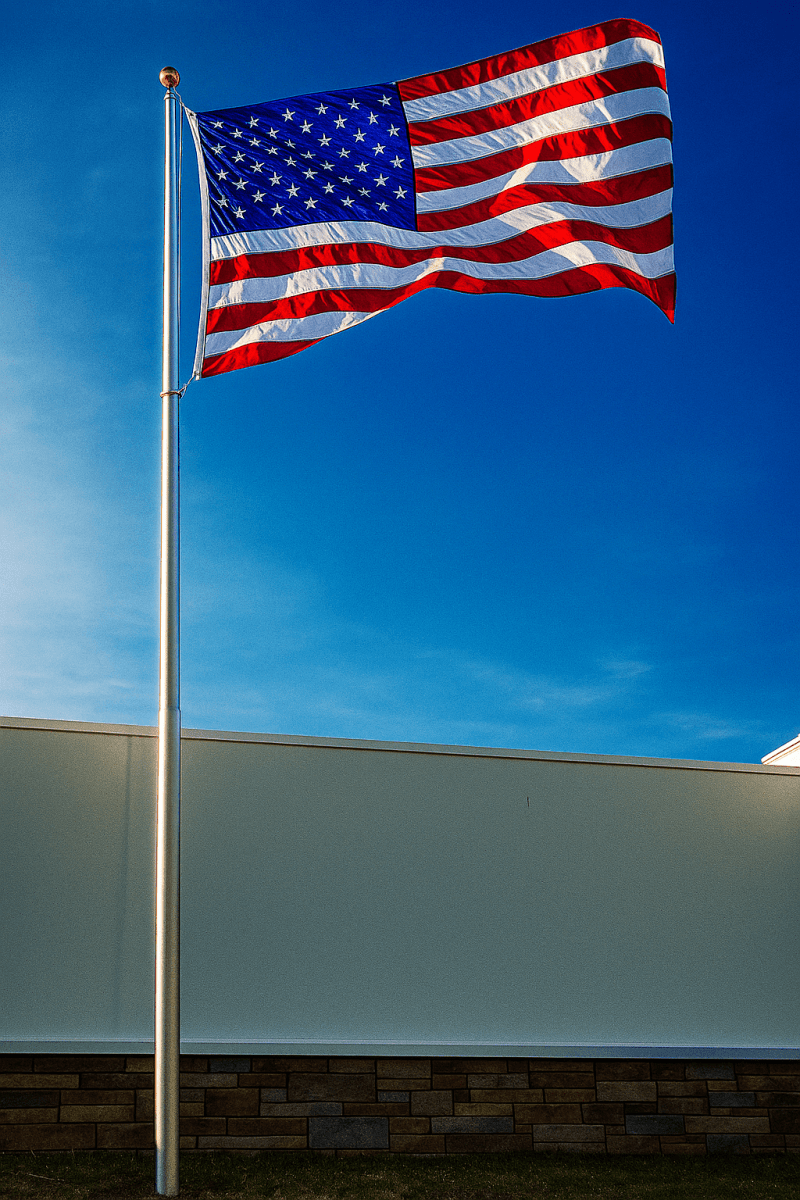

A flagpole can become one of the most recognizable features on a school property. It gives students, staff, families, and visitors a shared focal point while creating a natural place for ceremonies and everyday displays of school pride. The importance of flagpoles in schools and campuses goes well beyond appearance. A well-planned installation can support tradition, strengthen campus identity, and make respectful flag display part of the school’s daily rhythm.
For administrators and facilities teams, that means choosing more than a pole that simply looks right. Site placement and access deserve attention before installation begins. The same goes for operating style and long-term upkeep.
Building a Stronger Campus Identity
Schools are full of visual landmarks, from entry signs to athletic fields. A flagpole adds another point of recognition, especially when it stands near a main entrance or other prominent area.
Scale matters just as much as visibility. A flagpole that suits a compact elementary school may look undersized on a large high school or college campus, while an oversized pole can overwhelm a smaller building. Matching the display to the surrounding architecture helps the entire property feel balanced rather than pieced together.
A thoughtful location can also help the flagpole feel connected to the rest of the grounds. Instead of reading as a standalone fixture, it becomes part of the school’s overall presentation.
Schools may also use additional approved flags to reflect school or state identity. When more than one flag is displayed, the arrangement should remain orderly and respectful. Thoughtful spacing gives each flag room to move while keeping the American flag in the proper position of prominence.
Supporting Respectful Flag Ceremonies
Flag ceremonies give students a direct role in traditions that can otherwise feel distant from everyday school life. Morning raising ceremonies and end-of-day lowering routines can create opportunities for students to practice responsibility and teamwork. Special observances can add meaning to those same routines.
Student groups may take part through Junior Reserve Officers’ Training Corps (JROTC) programs or Scout organizations. Student government and other campus groups can participate as well. A flagpole with an easy-to-operate system helps those ceremonies run smoothly and keeps attention on the moment itself.
The halyard, which is the rope or cable used to raise and lower a flag, should be simple to handle. On campuses with frequent public access, an internal halyard may be worth considering. This setup keeps the operating system inside the pole rather than exposed along the exterior.

Planning for Daily Campus Use
The best location for a school flagpole should work on an ordinary Tuesday just as well as it does during a graduation, Veterans Day program, or community event. Staff members may need to raise and lower flags, inspect hardware, or adjust the display for weather and observances. A poor location can make those routine tasks more difficult than they need to be.
Before choosing a site, administrators and facilities teams should consider several practical questions:
- Is the flag clearly visible from the school’s main entrance?
- Does the flag have enough open space to fly without striking nearby objects?
- Can authorized staff access the operating hardware safely?
- Is the pole clear of utility lines and other overhead hazards?
Traffic patterns matter, too. A flagpole should not create a bottleneck near bus lanes or force staff into an awkward spot beside moving vehicles. The best site should give the display visibility without getting in the way of how people already move through the property.
Choosing a Flagpole for the Setting
School properties vary widely, so the right flagpole should match the site instead of following a one-size-fits-all approach. A neighborhood elementary school may need a modest display near the front entrance, while a high school with athletic fields may need something more prominent. College campuses can have several suitable locations, each with different visibility and traffic considerations.
For larger institutional properties, a heavy-duty commercial flagpole may be the better fit when the location calls for greater height or a more substantial presence. The exact model should still be selected according to manufacturer specifications and local site conditions. Appearance matters, but the pole also needs to suit the intended flag size and the environment where it will stand.
Material and operating style can further narrow the options. Aluminum offers the clean, traditional appearance common on many commercial properties, while different finishes can help the pole complement nearby buildings. Internal and external halyard systems each have practical advantages, so schools should choose based on access and security needs.
Facilities teams should also think about who will operate the pole and how often the flag will be changed. Those day-to-day details can matter just as much as the pole’s height or finish.
Preparing for Safe Installation and Upkeep
A school flagpole needs a secure foundation that matches the exact pole being installed. Foundation dimensions and installation requirements should come from the manufacturer rather than a generic rule of thumb. Local building requirements and underground utilities also need to be addressed before excavation begins.
When choosing a location, consider how students, staff, buses, and other vehicles move through campus. Students may walk past the area several times a day, while buses and maintenance vehicles move through nearby spaces. Visitors add another traffic pattern to consider. Keeping the pole out of high-conflict traffic areas can make the display easier to access without interfering with everyday campus movement.
Routine maintenance does not need to be complicated. Staff should periodically inspect the flag and operating hardware, then check the pole's visible condition. If parts begin to wear or the system becomes difficult to use, addressing the issue early helps keep the display orderly and dependable.
Lighting should also be part of the plan if the American flag will remain raised after dark. A properly illuminated display keeps the flag visible at night and allows the campus to maintain a respectful presentation after school hours. Considering lighting during installation can also produce a cleaner result than adding fixtures later.

Strengthening the Flagpole’s Role on Campus
The importance of flagpoles on school campuses is easy to see when the display feels like a natural part of the property rather than an afterthought. The right setup can support ceremonies while giving the campus a dependable visual centerpiece. Careful planning also makes the display easier for staff to operate and maintain over time.
Liberty Flagpoles offers American-made options for schools and other commercial properties looking for a durable, professional display. Our team can help you compare styles and choose a flagpole that fits the scale of your grounds and the way your campus plans to use it.
If you want help bringing the installation together, check out our professional flagpole installation services. Our team can help with the setup, so your school’s flagpole is placed appropriately and ready to become a lasting part of campus life.