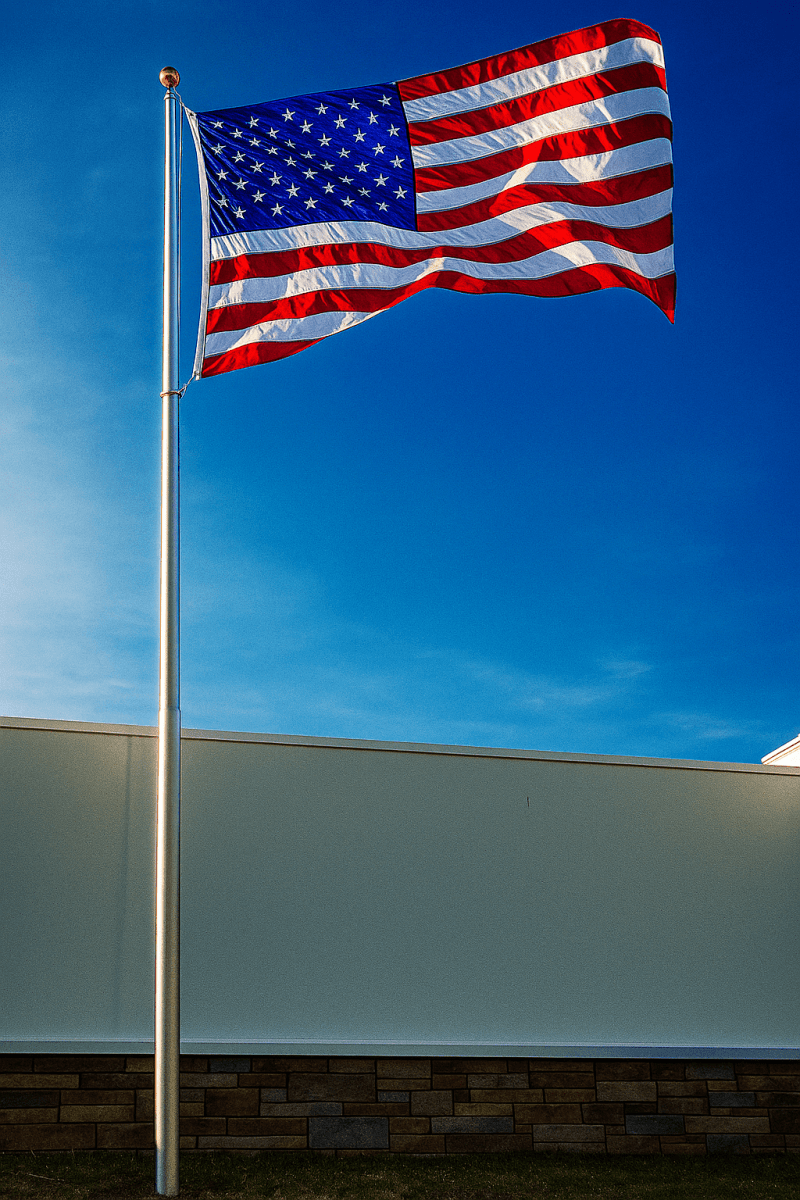
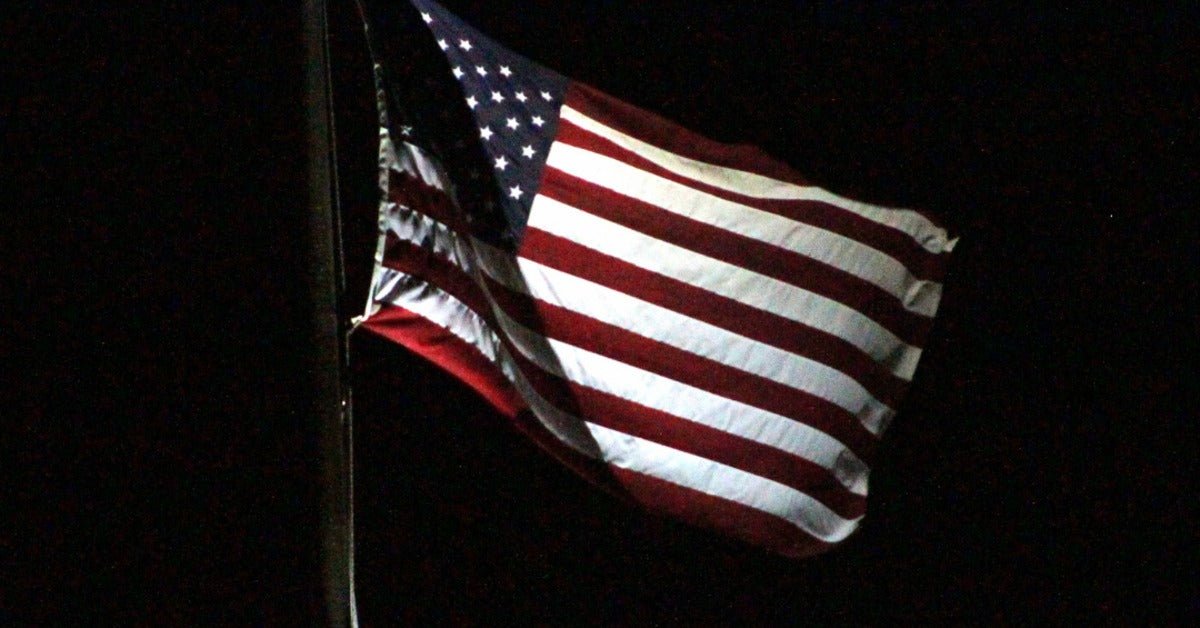
Flying the American flag after sunset takes a little planning, but it’s worth the effort. A well-lit flagpole keeps your display visible, respectful, and sharp long after the day winds down. If you’re comparing down-lighting vs. up-lighting for your flag, the best choice depends on your property layout and maintenance preferences. Both options can work beautifully when they’re aimed well and matched to the flagpole.
Understanding How Flag Lighting Works
Flag lighting has one main job: keeping the flag visible after dark. The United States Flag Code says the flag should be properly illuminated if it is displayed at night. That leaves room for different setups, since every property has its own challenges.
Most flag displays use either up-lighting or down-lighting. Up-lighting sends light from the ground toward the flag. Down-lighting places the light above the flag and sends the beam downward. Both brighten the same display, just with a different look.
The right setup should show the flag clearly without creating glare. It should also hold up to normal outdoor conditions if your flag flies year-round.
Choosing Up-Lighting for Classic Curb Appeal
Up-lighting is the option many homeowners picture first. A fixture sits near the base of the pole and points upward toward the flag. It can be part of a wired system or a solar-powered flagpole light designed for outdoor display.
This style creates a dramatic look because the beam catches the flag as it moves. It can also make the pole itself stand out, which adds a polished touch to your front yard or business entrance. If you already have lighting around the pole, up-lighting often feels like a natural fit.
Up-lighting is approachable because the fixture is easy to reach. You can clean the lens, adjust the angle, or clear leaves without much hassle. That convenience matters through snow and mowing season.
Still, up-lighting needs open space around the flagpole. Tall shrubs, deep mulch, and seasonal decorations can block the beam. If your landscaping changes often, plan your lighting placement with future growth in mind.
Choosing Down-Lighting for Even Coverage
Down-lighting takes the opposite approach. The fixture sits above the flag and shines downward. Because the light comes from above, it can spread more evenly across the flag as it moves.
This option often looks clean and professional. It is a strong fit for commercial properties and larger residential displays where a crisp presentation matters. The light focuses on the flag itself instead of brightening the entire base area.
Down-lighting also avoids some of the issues that come with landscaping. Plants, mulch, edging, and snow near the ground are less likely to interfere with the beam. That helps properties with heavily planted beds or busy public areas.
The trade-off is access. A light mounted high on the pole may be harder to inspect or replace. If you choose down-lighting, think through how you’ll reach the fixture safely when it needs attention.

Comparing Both Options in Real Weather
Outdoor lighting has to deal with the same weather your flagpole does. Rain, snow, wind, and heavy summer pollen can affect how well a light performs. Neither option is completely hands-off, but each one has different maintenance needs.
Up-lighting is easy to reach, but ground-level fixtures face yard debris and accidental bumps. Down-lighting usually stays cleaner, but the height can make service more involved. A quick seasonal check keeps either setup aimed where it belongs.
Matching the Light to the Flagpole
Lighting works best when it matches the flagpole and flag size. A small residential flag does not need the same lighting setup as a large flag at a business entrance. The goal is steady visibility, not maximum brightness.
Start with the flag’s movement. A flag shifts constantly in the breeze, so the beam needs enough coverage to follow it. If the light is too narrow, the flag may drift in and out of the brightest area.
Use this quick checklist before choosing a setup:
- Check the pole height and flag size.
- Look for nearby trees, shrubs, and rooflines.
- Consider how easy the fixture will be to clean.
- Think about snow, leaves, and seasonal yard work.
- Make sure the flag remains visible from the main viewing area.
Good placement also protects the look of your property. Aim for clear visibility without shining light where it does not belong.
Installing Lighting With Respect and Safety
A good lighting setup should look intentional, not improvised. Take time to aim the fixture after dark so you can see how the light actually lands on the flag. What looks right in the afternoon may need a small adjustment after sunset.
Safety matters, too. Outdoor lighting should be made for exterior use and installed according to the product directions. If wiring is involved, use outdoor-rated components and keep cords or fixtures away from mowing paths.
For solar options, place the panel where it can collect steady sunlight during the day. Shade from trees, gutters, or nearby buildings can limit charging. A seasonal check helps as the sun’s path changes.
While installing lighting, it is also a good time to inspect your flag and hardware. Check the clips and the halyard. A few minutes of upkeep helps your flag fly cleanly and keeps the whole setup looking reliable.
Deciding Which Lighting Style Fits Best
So, which is better when you compare down-lighting and up-lighting for flags? Up-lighting is often best for homeowners who want a classic look and easy access. Down-lighting is often best for larger properties that need even coverage and a more professional finish.
Your final choice should come down to the property, not a one-size-fits-all rule. If your flagpole sits in open landscaping, up-lighting may give you the proud, dramatic look you want. If the pole is tall or surrounded by heavy planting, down-lighting may provide clearer coverage with fewer ground-level interruptions.
Both options can help you display your pride after sunset. The key is choosing quality equipment, placing it carefully, and checking it throughout the year. When those pieces come together, your flag can remain the center of attention from morning through night.

Lighting Your Flag With Confidence
A strong nighttime display starts with the right lighting plan and a flagpole built for long-term pride. Whether you choose up-lighting, down-lighting, or a custom fit for your home or business, Liberty Flagpoles can help you find durable options that suit your property and your goals.
From American-made flagpoles to lighting accessories, our team makes it easier to display your pride with confidence after sunset. If you want help planning the setup, check out our installation services for support and resources.
Celebrate America 250 With a Display That Shines
As America approaches its 250th anniversary on July 4, 2026, a well-lit flag display is a meaningful way to prepare for the celebration. The right lighting helps your flag stand out during evening gatherings, holiday weekends, and everyday displays of pride.
Shop Liberty Flagpoles for American-made flags, flagpoles, and accessories built for proud, respectful display. You can also explore our America 250 collection to get your home or business ready for this once-in-a-generation milestone.