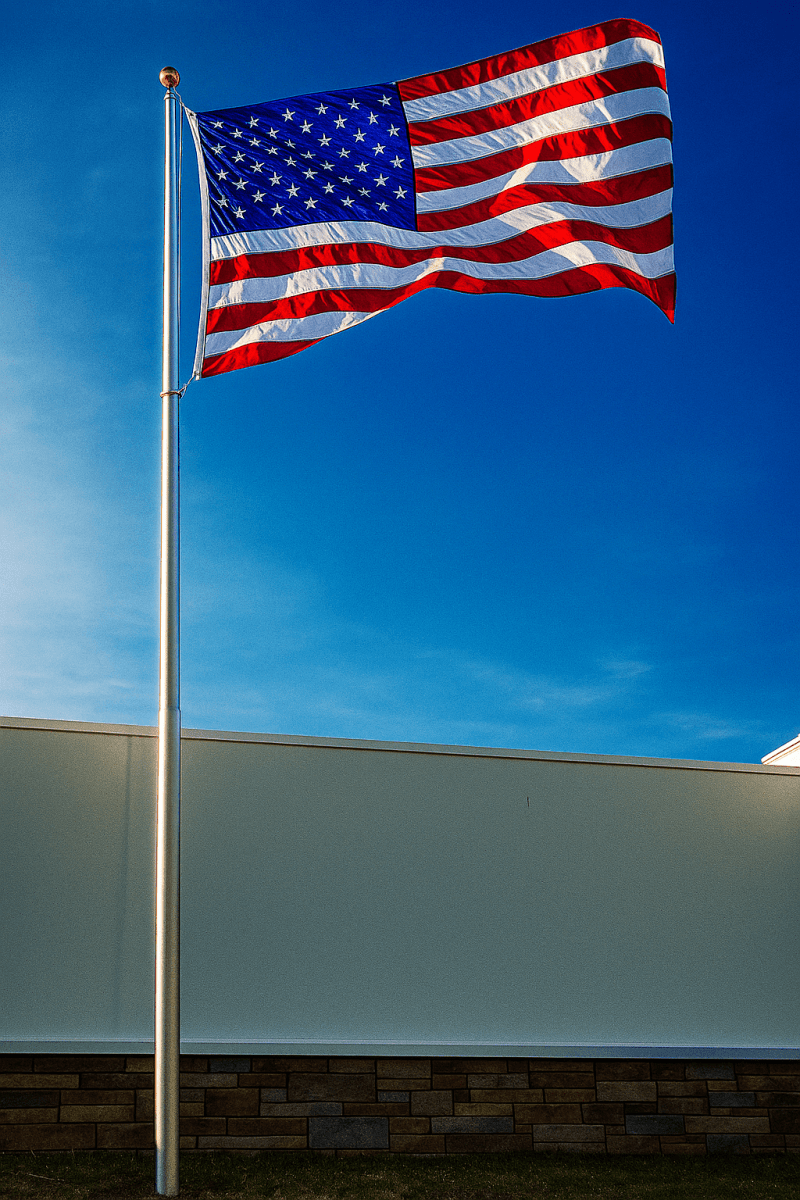

Flying a flag may seem simple, but the hardware behind it plays a bigger role than most people expect. When you take time to understand the different types of flagpole rope, you start to see how each piece affects performance and durability. From traditional rope systems to more modern designs, the right setup keeps your flag moving smoothly and looking sharp.
What Does Flagpole Rope Do?
Flagpole rope, commonly called a halyard, is the system used to raise and lower your flag. It may seem basic, but it handles constant movement and exposure to the elements. Over time, that wear adds up if the rope isn’t built for outdoor use.
A well-functioning halyard keeps your flag moving smoothly without tangling or unnecessary strain. When everything works properly, raising your flag feels controlled and consistent. When it doesn’t, you’ll notice resistance or uneven movement.
You’ll usually see halyard systems on sectional and commercial flagpoles. In these setups, the rope can run along the outside or stay enclosed inside the pole, depending on the design.
The halyard also affects how your flag behaves in the wind. Proper tension helps reduce snapping and prevents the flag from wrapping around the pole. That small detail can go a long way in protecting both the rope and the flag itself.
How External Halyard Systems Work
External halyard systems are the most familiar option. In this setup, the rope runs along the outside of the flagpole and passes through a pulley at the top. It then ties off at a cleat near the base.
This design remains popular because it’s simple and easy to manage. You can quickly check the rope for wear and replace it when needed. For many homeowners, that accessibility makes a real difference.
Here are a few benefits of external halyard systems:
- Easy to access for inspection
- Simple to operate day to day
- Lower cost compared to internal systems
- Classic, traditional appearance
External systems also make it easier to swap flags for holidays or special occasions. You don’t need to open panels or reach inside the pole, which saves time. That flexibility is helpful if you like to update your display throughout the year.

How Internal Halyard Systems Work
Internal halyard systems take a more streamlined approach by keeping the rope inside the flagpole. Access is usually through a small door at the base, often with a lock for added security. This setup is common in commercial properties and public spaces.
By enclosing the rope, you protect it from the weather and reduce the chance of tampering. It also gives the flagpole a cleaner look, which many property owners prefer.
Internal systems offer several practical advantages:
- Clean appearance with no visible rope
- Added security for public or open areas
- Reduced noise in windy conditions
- Protection from the sun and moisture
Another benefit is longer rope life. Since the halyard stays shielded from direct sun and harsh weather, it often holds up better over time. That makes internal systems a strong option when durability is a top priority.
These systems can take a little more effort to service, but many owners feel the tradeoff is worth it for the cleaner look and added protection.
How Rope Material Affects Performance
The material used in your flagpole rope plays a direct role in how it performs. Since the rope faces sun, wind, and moisture every day, durability matters. Choosing the right material helps your system stay reliable over time.
Most flagpole ropes are made from synthetic materials built for outdoor use. These materials are designed to resist wear while staying flexible enough for smooth operation.
When comparing options, look for features like weather resistance and low stretch. A smoother surface can also reduce friction when raising or lowering your flag. Small details like these can make daily use feel much easier.
It’s also worth thinking about your local conditions. Strong sun can wear down rope faster, while frequent rain or humidity can change how it feels during use. Matching your rope to your environment helps keep everything running smoothly.
Why Some Homeowners Choose Telescoping Flagpoles
Not every flagpole relies on a rope system. Telescoping flagpoles take a different approach by eliminating the halyard entirely. Instead, they use interlocking sections that extend and lock into place.
This design appeals to homeowners who want a simpler, low-maintenance setup. Without a rope, there’s no need to deal with tangling or regular replacement. It also creates a clean look with fewer moving parts.
Telescoping flagpoles are known for being easy to assemble and operate. You can raise or lower the pole without working with pulleys or cleats. For many homeowners, that convenience makes them a natural fit.
Signs Your Flagpole Rope Needs a Replacement
Even a durable rope will wear down over time. Regular inspections help you catch small issues before they turn into bigger problems. That keeps your flag flying smoothly and safely.
Watch for these signs that you might need to replace your rope:
- Fraying along the surface
- Fading or discoloration
- Increased stiffness during use
- Wear near pulleys or clips
You may also notice the rope becoming harder to grip or slipping when tied off. These small changes can affect how securely your flag stays in place.
If you spot any of these signs, it’s best to replace the rope sooner rather than later. A fresh halyard keeps everything working the way it should.

Choosing the Right Setup for Your Property
When choosing between flagpole rope systems, think about how you plan to use your setup. Some homeowners prefer the simplicity of external halyards, while others like the clean look of internal systems.
If convenience is your priority, a rope-free option may be worth considering. Many people compare traditional setups with telescoping designs when deciding what fits their space best.
It also helps to consider how often you raise or lower your flag. A system that feels easy to use will naturally become part of your routine. That consistency helps keep your display looking sharp.
Keep Your Flag Flying Smoothly Every Day
Taking the time to understand the different types of flagpole rope makes choosing the right setup much easier. Whether you go with an external system, an internal design, or a rope-free option, each approach serves a purpose. The goal is to find what works best for your property and your routine.
When your equipment works smoothly, raising your flag becomes second nature. That consistency helps maintain a respectful and polished display year-round. It’s a small detail that makes a lasting difference.
If you’re ready to upgrade your setup, Liberty Flagpoles offers durable, American-made options built for long-term performance. Our team can help you find a system that’s easy to assemble and customized for your home. We also offer professional installation services to help make the process as easy as possible for you.
As America’s 250th anniversary approaches, it’s a great time to make sure your flag display is ready. Check out our America 250 collection and join the community of proud owners who trust Liberty Flagpoles to help them display their pride with confidence.